
Letter chasing payment before legal action
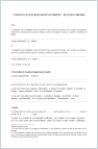
Late payment by customers is just one of the problems an accountant has to face. Fortunately, there is a way to wake up the people who owe you money, and get them to do something about it.
Last chance
Most businesses want to avoid costly and time-consuming litigation, so when you show them that you mean business they will most often pay up to avoid extra hassle. So a letter from you that looks like a formal legal notification of an impending lawsuit is a way of saying to your customer “this is your last chance”. Indeed these letters normally get passed to the owners of the business rather than the person who (misguidedly) thinks they are doing their employer a favour by not paying you.
It’s always best to keep such letters as simple as possible. You may have all sorts of issues involving your trading relationship that you would like to point out, but this is not the place for such a discussion.
There’s no official legal form which your chaser letter has to take. However, you need to include all the essential information such as: what the sale was (invoice reference and date), how much is owed, for how long, and your payment information. You then set a final deadline for payment. This can be any reasonable period from one week (it would be hard for payment to reach you in less than a week) to 30 days. Ten days is perfectly reasonable assuming you have already been waiting a long time for payment.
Using our Letter Chasing Payment Before Legal Action should help get slow/late payers back on track.
Related Topics
-
HMRC urges agents to review excepted estates
HMRC is reminding tax agents to review inheritance tax (IHT) returns submitted for excepted estates following changes introduced from 1 January 2025. The warning follows concerns that some estates may have been incorrectly treated under the new rules. What should you check?
-
Government launches consultation package on HMRC powers and tax administration
The government has launched a wide-ranging package of consultations on tax administration, including proposals to strengthen HMRC's debt recovery powers, modernise tax agent regulation and expand the use of digital services. Several of the measures could have significant implications for taxpayers and advisers. What has been proposed?
-
What are HMRC’s new procedures for export evidence?
HMRC has updated its guidance about the proof of export you must retain if you ship goods abroad and zero-rate the sales. How will the new guidance affect your business?
 This website uses both its own and third-party cookies to analyze our services and navigation on our website in order to improve its contents (analytical purposes: measure visits and sources of web traffic). The legal basis is the consent of the user, except in the case of basic cookies, which are essential to navigate this website.